
How Does an Energy Storage System Actually Work?
⚡ One Minute Energy Storage | Episode 02
How Does an Energy Storage System Actually Work?
Most people know what an ESS is.
But very few people truly understand how it works.
And this is exactly where system design mistakes often begin.
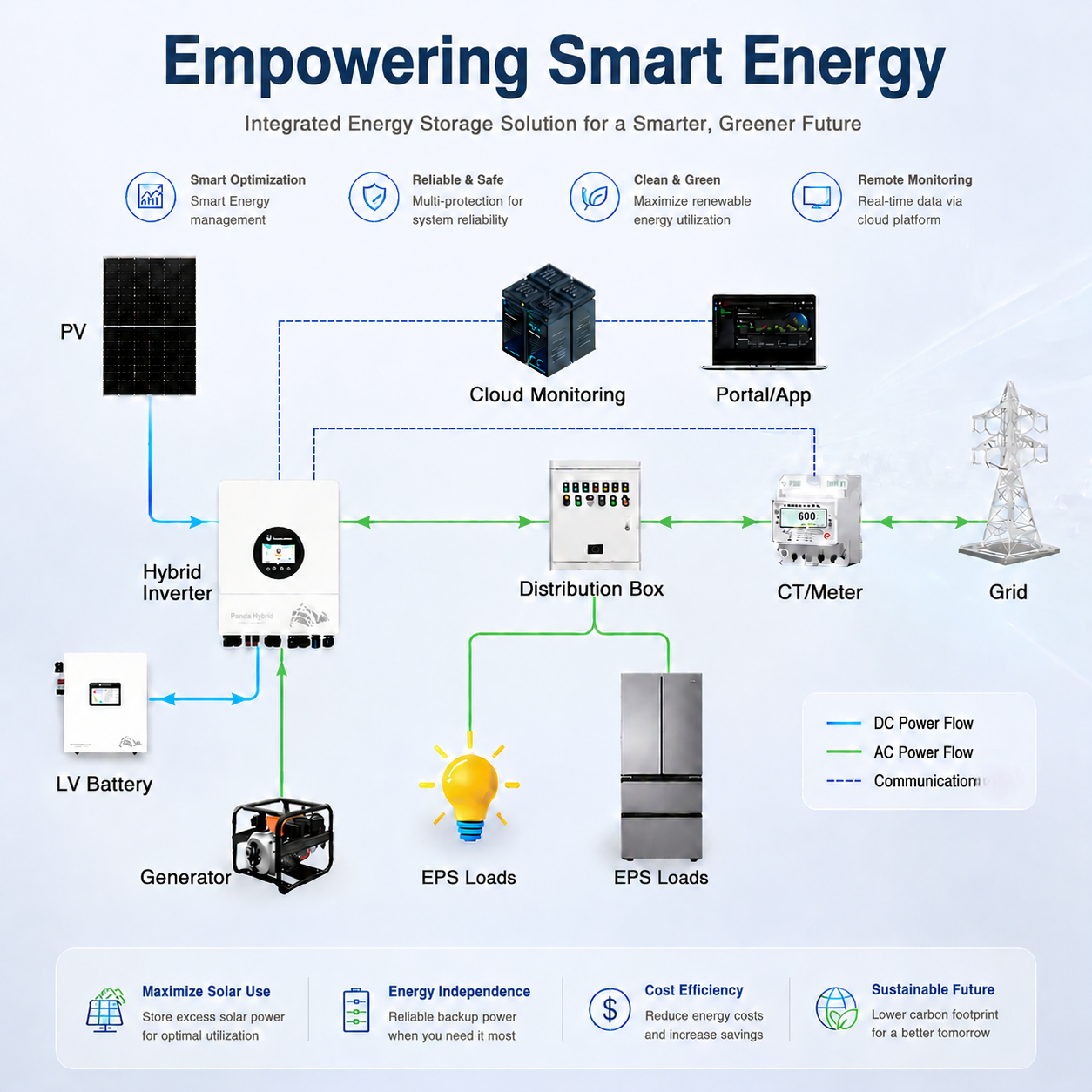
⚙ The basic energy flow is actually very simple:
☀ Solar Panels generate electricity
⚡ Hybrid Inverter manages and converts power
🔋 Battery stores excess energy
🏠 Load consumes electricity
🌍 Grid acts as backup or export channel
🔄 Step-by-step energy logic:
① Daytime (Solar Priority Mode)
Solar power is first used to supply the load.
Excess energy is stored in the battery.
If the battery is full → power goes to the grid (if allowed).
② Nighttime (Battery Discharge Mode)
No solar input.
The system automatically switches to battery power.
Stored energy supplies the load.
③ Low Battery / High Demand (Grid Support Mode)
When battery is low or load is high,
the grid automatically provides backup power.
🧠 The key idea:
An ESS is not about “storing electricity”.
It is about intelligently deciding when and where energy should flow.
⚠ This is why system design matters:
A poorly designed ESS can lead to:
Wasted solar energy
Low battery utilization
Higher electricity cost than expected
Poor ROI for customers
💡 A well-designed ESS achieves:
✅ Maximum solar self-consumption
✅ Optimized battery cycling
✅ Lower dependency on grid
✅ Stable backup during outages
💬 Question of the Week
In your opinion, which part of the system is most critical for performance?
① Solar panels
② Hybrid inverter
③ Battery
④ System design & configuration